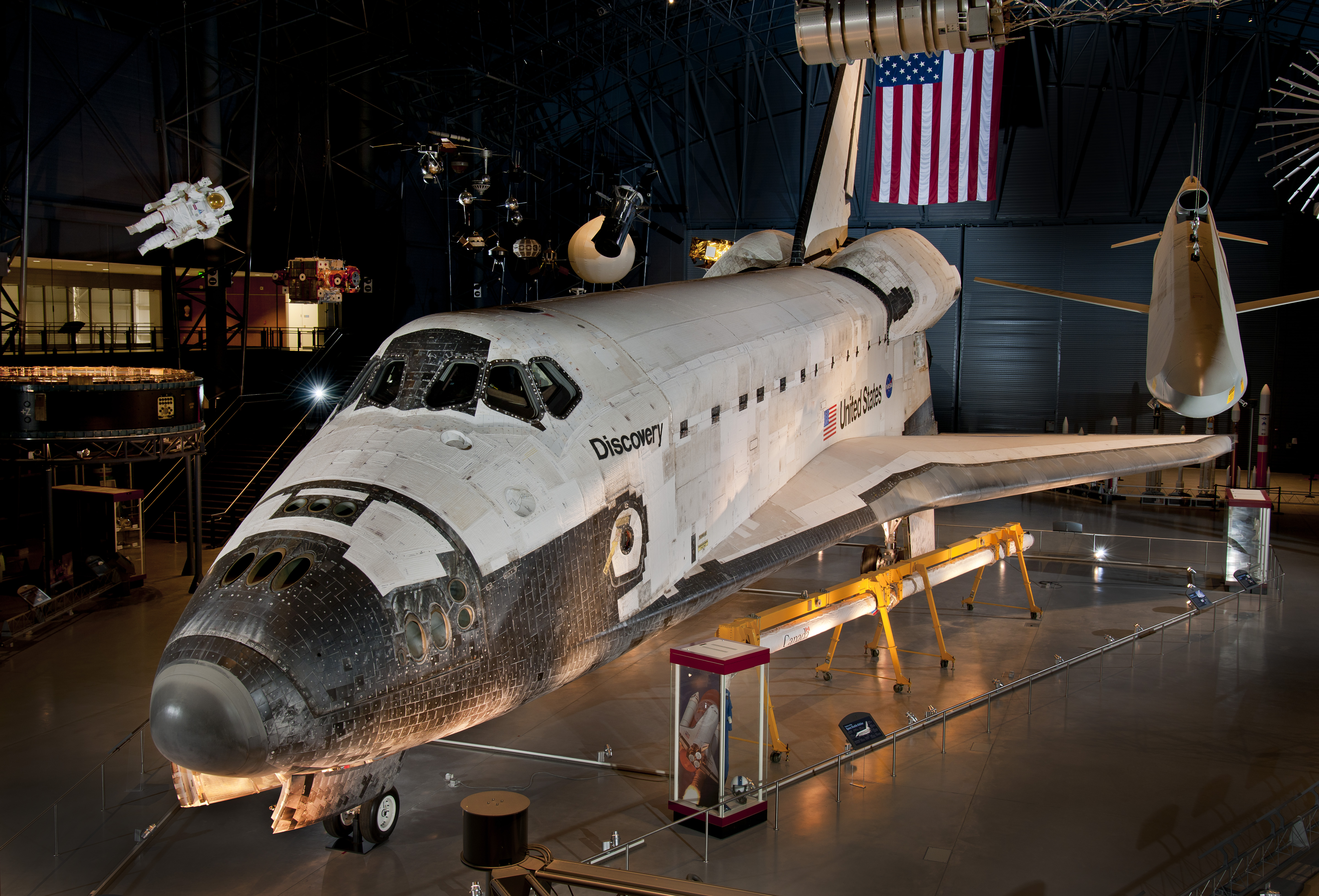
Primate Capsule, Mercury
Object Details
- Manufacturer
- McDonnell Aircraft Corp.
- Summary
- Prior to the flights of astronauts in Project Mercury, the first U.S. human spaceflight program, chimpanzees were used to better understand the effects of acceleration and weightlessness. Instead of a spacesuit, these chimps had a pressurized capsule that allowed them to breathe even in case of a failure of spacecraft cabin pressure. The chimp was strapped into a retaining harness inside the capsule and had to operate a system of levers and lights to test its reactions to flight. It was rewarded with banana pellets or a drink of water, or punished with mild electrical shocks, for taking the right or wrong actions.
- Chimps were launched into space twice: "Ham" on Mercury-Redstone 2 in January 1961, and "Enos" on Mercury-Atlas 5 in November 1961. In 1967 the NASA Manned Spacecraft Center in Houston transferred this capsule to the Smithsonian. It is unknown whether it was used on a mission.
- Country of Origin
- United States of America
- See more items in
- National Air and Space Museum Collection
- Credit Line
- Transferred from the National Aeronautics and Space Administration
- Data Source
- National Air and Space Museum
- Inventory Number
- A19680282000
- Type
- SPACECRAFT-Crewed-Test Vehicles
- Restrictions & Rights
- Usage conditions apply
- Materials
- Aluminum and Fiberglass
- Dimensions
- Overall: 40 in. tall x 20 in. wide x 16 in. deep (101.6 x 50.8 x 40.6cm)
- Record ID
- nasm_A19680282000
Fiberglass and aluminum capsule; painted silver with 2 plexiglas windows; zippered and laced restraining straps; 3 levers-red, white, black; outer surface stained, paint scratched and chipped.