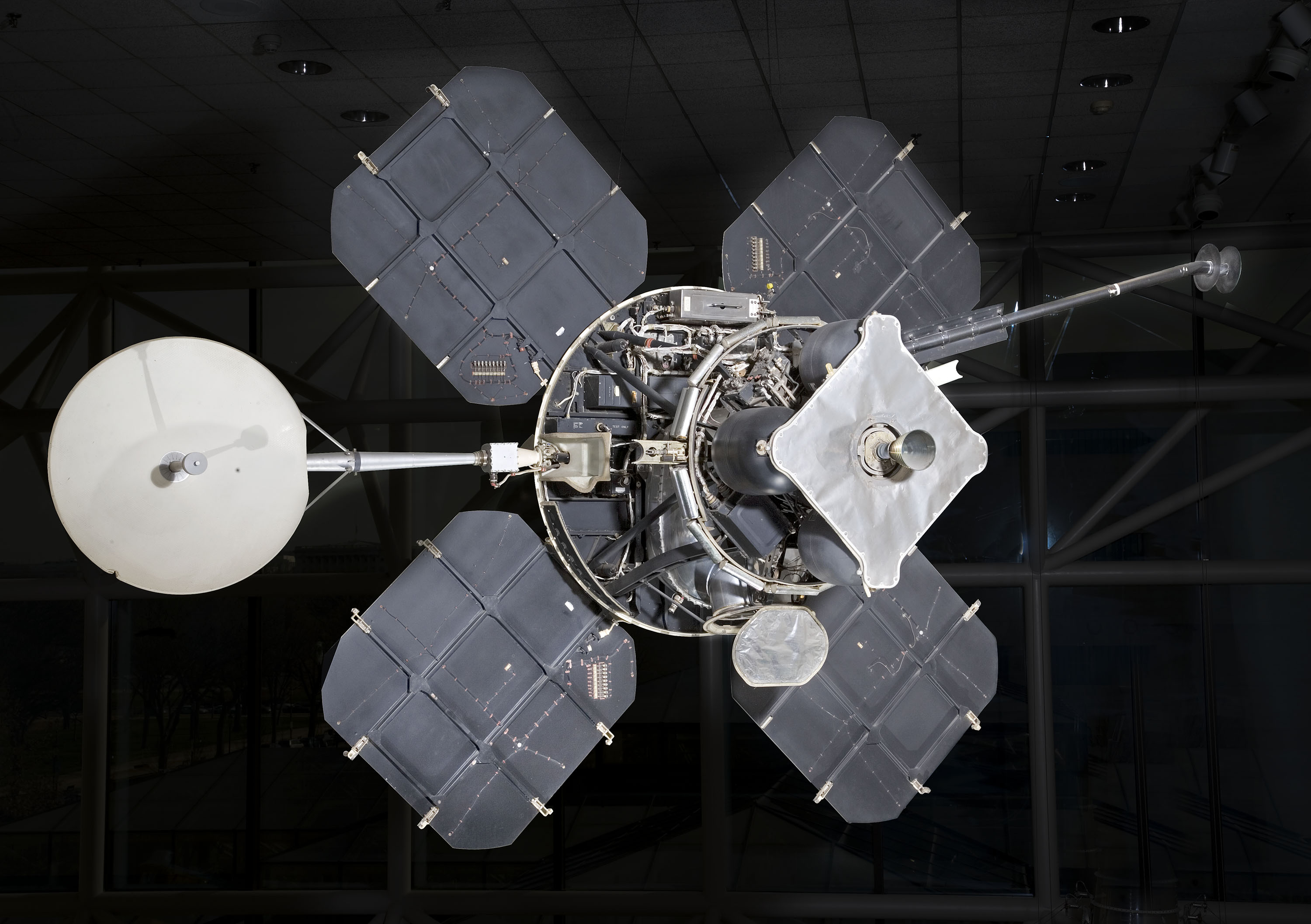
Model, Observatory, UV, Orbiting, Astro-1, 1:20
Object Details
- Manufacturer
- NASA Marshall Space Flight Center
- Summary
- This is a wooden scale model (1:20) of the Astro-1 observatory designed to fly on Space Shuttle in 1986; the observatory included a Field Camera to observe Comet Halley. The three major instruments on Astro-1 included the Hopkins UV Telescope (HUT), the Ultraviolet Imaging Telescope and the Wisconsin Ultraviolet Photo-Polarimeter Experiment. The Challenger accident led to a four-year delay and removal of the Field Camera because the Comet Halley was no longer in sight. After shuttle flights were resumed, the observatory was installed on the orbiter Columbia with an x-ray telescope in place of the comet imager. On its nine-day flight from December 2 to 11, 1990 the observatory functioned smoothly and made numerous astronomical observations. The full-scale flown HUT (Catalogue # 20010307000) and the Ultraviolet Imaging Telescope from Goddard Space Flight Center are also in the collection.
- Country of Origin
- United States of America
- See more items in
- National Air and Space Museum Collection
- Credit Line
- Transferred from the National Aeronautics and Space Administration
- Data Source
- National Air and Space Museum
- Inventory Number
- A19880242000
- Type
- MODELS-Crewed Spacecraft & Parts
- Restrictions & Rights
- CC0
- Materials
- Painted surfaces on wood
- Dimensions
- 3-D (L x W x H) (telescopes in stowed position): 20.3 × 27.9 × 39.4cm, 6.4kg (8 in. × 11 in. × 1 ft. 3 1/2 in., 14lb.)
- Record ID
- nasm_A19880242000
Bundle of white cylinders of different diameters with attached boxy instrument sections.